Bottle warming and breast milk storage: what the desk and the kitchen can offer a parent
A hotel can offer three things: a labeled shelf in a fridge the desk controls, hot water and a jug for warming a bottle, and a kettle in the room. Sterilizing is a separate service with its own rule.
AI draft · awaiting editorial review
Contents
Key takeaways
- A request to warm a bottle is three requests: where the milk is kept, how it is warmed, and how the bottle is cleaned; answer each one separately.
- Decide where milk is stored before a guest asks: a labeled shelf in a fridge the desk can open beats a minibar the hotel cannot supervise.
- The hotel supplies hot water and a jug; the parent decides the temperature and whether the milk is still good.
- Say what the hotel does not offer as clearly as what it does, and say it before arrival, so the parent can pack for it.
- Record the request on the guest profile and in the service directory, so the answer does not depend on who is on shift.
A hotel can offer three things: a labeled shelf in a fridge the desk controls, hot water and a jug for warming a bottle, and a kettle in the room. Sterilizing is a separate service with its own rule. Each offer must be written, owned and recorded.
It is 23:40 and a parent is at the desk with a bottle, asking quietly whether the hotel can warm it. One receptionist says the kitchen is closed, the next says yes and disappears for ten minutes, a third points at the kettle in the room. The parent remembers which one they got. This article splits hotel bottle warming and breast milk storage into three services, each with a place, an owner and a written limit, so the answer is the same on every shift.
What do parents actually ask the front desk for?
Three things, usually in one sentence: somewhere to keep expressed milk (milk a parent has pumped and brought with them), a way to warm a bottle, and a way to clean it. Treat them as three services, because each has a different owner, a different place and a different limit.
Split the sentence at the desk. "Can you keep this?" and "Can you warm this?" are different requests with different answers, and answering one while assuming the other is how a guest ends up carrying a bottle around the lobby at midnight. The parent is testing consistency, not enthusiasm: the real question behind the request is whether the answer will be the same at 6 a.m., on the next shift and on the second night.
Ask what they brought before offering anything. Many parents travel with bottles, a cooler bag and their own sterilizer; when they do, the hotel's job shrinks to a fridge shelf and hot water, and the conversation takes a minute. Name the department for each service: storage and the record at front office, warming at the kitchen or in the room, cleaning at housekeeping or nowhere at all. Write the answer into the service directory and the pre-arrival message, so the guest can plan before arrival instead of asking at 23:40. This is part of what families check before and during a stay.
The hotel holds the milk, labels it and returns it. It does not become the hotel's property, and the parent, not the hotel, decides whether it is still good. The one thing the desk must never do is promise a service that only exists on the day shift.
ChecklistFive questions to ask the parent at check-in
- What have you brought: bottles, a cooler bag, a sterilizer?
- Do you need fridge space, and until when?
- Do you need warming, and at which hours?
- Do you need cleaning or sterilizing?
- May we keep this request on your profile for your next stay?
Where should a hotel store breast milk?
On a labeled shelf in a fridge the hotel controls and can open at any hour, with the guest's name, room number and the date the parent gives. The minibar is the wrong shelf, and an unmarked corner of the kitchen walk-in is the wrong place.
The minibar fails for a practical reason: it holds the hotel's chargeable stock, housekeeping restocks it, its door opens all day, and nobody can tell a guest's bottle from the hotel's own water. One restock and the item has been moved or thrown out. The kitchen walk-in on its own fails too: it is a staff area, the guest cannot check on their own item, and the item competes with food stock for space and attention.
The workable middle is a marked shelf or a closed box in a fridge that front office or the kitchen can reach at any hour, handed over at the desk and written on the guest's record. If the hotel cannot promise a stable fridge, it says so and offers ice from the bar for the guest's own cooler bag.
The label carries guest name, room number, the date and time the parent says the milk was expressed, and the date the hotel will hand it back or clear the shelf. The hotel records what the parent says; it does not judge the milk. The holding rule is the hotel's own: a maximum written into policy, for example until the guest checks out, and stated at handover.
Handover discipline is what makes the shelf trustworthy: whoever takes the item writes it down, whoever returns it signs it back, and the item is never left standing on the counter. The shelf needs a named cleaner and a frequency in the housekeeping or kitchen cleaning schedule, or it becomes the corner where old items are found.
| Option | What the guest gets | What the hotel must control | Where it usually fails |
|---|---|---|---|
| Minibar shelf | Guest uses the room fridge | Restocking, room moves | Housekeeping clears the minibar |
| Labeled shelf, desk or kitchen fridge | Handover with a record line | Label, hours, holding rule | No department owns the shelf |
| Guest's cooler bag with bar ice | Guest keeps the item | Ice supply, a place for the bag | The bar is closed |
The fridge shelf belongs on the same list as cots and high chairs; see the equipment list a baby-friendly hotel publishes.
How should a hotel warm a bottle?
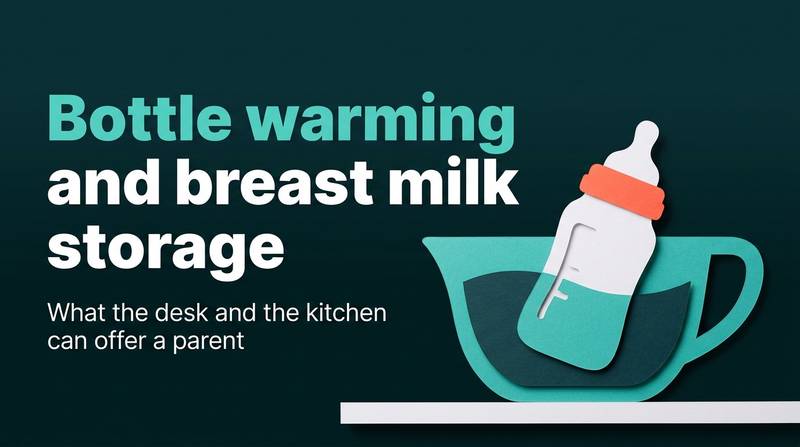
The hotel supplies the means and the parent decides the temperature: hot water in a jug or a bowl, a clean jug or cup, and a stable place to stand the bottle. The hotel does not test, taste or judge the milk.
There are two delivery models and the hotel picks a default: kitchen service, where the guest calls and a staff member brings hot water in a jug and stands the bottle in it, or in-room, where a kettle lets the guest do it themselves. The other one is stated as the fallback.
The kettle is the cheaper default: no staff time, no kitchen dependency, works at 3 a.m., and the cost is one appliance per room plus a line in the room folder saying what it is for. The kitchen service still earns its place: not every room has a kettle, not every parent wants to handle hot water in a room with a toddler, and a staffed service tells the guest the hotel has thought about this before.
Write the method down. If the hotel also offers a microwave, that is a separate written line with its own rule; what turns a request into a complaint is offering it one night and refusing it the next. State the hours and the wait: "any time" is not a promise if the kitchen closes at 22:30, so the written line names the hours and what happens outside them.
Handling: carry the jug on a tray, do not walk an open bottle of the guest's milk through the lobby, and never take the bottle out of the guest's sight without saying where it is going and when it comes back. Charging is the hotel's decision. If it charges, the price sits on the service list before the request arrives, not negotiated at the desk at midnight.
Watch outThree sentences that turn a request into a complaint
"The kitchen is closed" becomes the written after-hours line. "We can warm it in the microwave" offered once and refused the next night becomes one written method, kept or dropped. "About ten minutes" said without checking becomes a stated time the staff member has confirmed with the kitchen.
What can a hotel offer for sterilizing bottles?
Usually less than for warming, and the honest version is written down: either the hotel provides a cleaning method it can repeat on every shift, or it says it does not and tells the parent before arrival.
There are three levels to choose from: nothing, with the guest using what they brought; a sink with hot water plus a dedicated brush and a drying rack in a staff area; or a countertop steam sterilizer kept at the desk or kitchen with a named owner. Each level costs something different. The first costs one clear sentence. The second costs a cleaning schedule and a place where the item can dry without being moved. The third costs a person who checks it works, a spare, and a rule for whose bottles go in and when.
The decision belongs on the baby-friendly equipment list, next to the cot and the high chair, not in the front desk's improvisation on the night. Do not sell a hygiene outcome: promise a method and a person, and leave the word "sterile" to the equipment's own instructions rather than the hotel's description of its service.
If the hotel offers nothing, say it twice: in the pre-arrival message and in the room folder. A parent who knows packs a sterilizer; a parent told at 22:00 at the desk cannot. Ownership crosses departments: housekeeping cleans it, food and beverage stores it, front office hands it over. Without one named owner the equipment disappears within a month. The guest's own equipment is the normal case, not the exception: give it a clean surface, a place to stand and a drying spot, and the request is answered without the hotel buying anything.
TipA model line for a hotel that offers no sterilizer
"We do not provide a sterilizer. Your room has a sink and hot water, and between these hours the kitchen will wash and dry your bottle if you bring it to the desk. Many guests bring their own; if you do, we will keep it with your other items."
How do you word it so the parent is not embarrassed?
Ask the way you ask about a late checkout: plainly, once, and without a comment on the baby. The parent is asking whether a service exists, not for a favor.
Put the offer where the parent does not have to ask: the pre-arrival message, the room folder, the service directory at the desk. A parent who reads it plans; a parent who has to ask is already unsure. Words that fail: "Of course, we love babies" is a promise with no mechanism. "We don't have anything for that" is a dead end with no alternative. "You can try the kitchen" sends the guest to negotiate with another department.
Words that work name the thing, the place, the hours and the person: "I will take the bottle to the kitchen, stand it in hot water and bring it back on a tray in about ten minutes. After 22:30 the kettle in your room does the same job." Handle the item in front of the guest: label it while they watch, say where it will be kept, and give them the record line so they know it is written down. Answer in the language the guest used; if the shift cannot, use the written card in that language rather than a gesture and a smile.
Privacy matters here. The request is personal information about a guest's family and health, so it goes on the guest record, not on a whiteboard the next guest can read. Do not comment on the baby, the milk or the parent's choices. One friendly sentence, then the service.
| The guest asks | A weak answer | The answer to write down |
|---|---|---|
| "Can you warm this bottle?" | "Maybe, if the kitchen answers." | "Kitchen until 22:30, about ten minutes; kettle in your room after." |
| "Is there a fridge for milk?" | "You can use the minibar." | "Labeled shelf in the desk fridge, with your name and a record line." |
| "Can you sterilize the bottle?" | "You can try the kitchen." | "We offer no sterilizer; the kitchen washes and dries between these hours." |
| "Is anyone there at night?" | "Someone, probably." | "The desk is staffed all night; the kitchen closes at 22:30." |
How should the hotel record the request for the next stay?
In two places with two purposes: the guest profile, so the next stay starts with the answer, and the service directory, so the answer does not depend on who is on shift.
What goes on the profile: the service provided, the department that provided it, the date, and the guest's stated preference, for example "prefers the kettle to the kitchen". Not the reason, and not a medical note. Write it when the request is made, not at the end of the shift, and have the next shift read it at the briefing.
The nightly gap belongs in the record. If the kitchen closes at 22:30, the record says what the desk offers after that, so the guest hears the same answer at midnight as at noon. The same written policy that carries age bands and extra beds carries the infant lines: what is offered, at which hours, by whom, and what is not offered. The child policy is covered in the article on age bands and extra beds, and the equipment that comes with them in how extra beds and their equipment are confirmed.
Once a season, count how often the service was asked for and how often it was refused, and decide whether the offer should change. That is a service decision, not a marketing one. The pre-arrival message is the cheapest place to record it: the guest answers before arrival and the desk has the answer on the day. The guest should be able to see the request moving; a request with a status, received and then on the way, removes the second phone call, and it is the same record the desk reads.
ChecklistWhat the record must carry
- Guest name and room number
- The service provided and the department
- The date and time
- The guest's stated preference
- The fallback after hours
- Whether the guest agreed to keep the request on the profile
What to do next
This week, write three lines and name an owner for each: where milk is kept, how a bottle is warmed, and what the hotel does not offer. Put them in the service directory, the pre-arrival message and the guest profile. The three services share one record, and that record is what the next stay starts from, on any shift.
If you are a traveler rather than a hotel manager, you can use the same three questions to choose a hotel in Türkiye (opens in a new tab) before you pack.
Frequently asked questions
Can a hotel store breast milk in the minibar?
It can, if the hotel writes the rule and can keep it. The minibar is the hotel's own stock shelf, restocked by housekeeping and opened all day, so a guest's item needs its own marked place and a label. A shelf in a fridge the desk can open is easier to keep straight. The parent decides whether the milk is still good; the hotel decides how long it will keep it.
Do we need to buy a bottle warmer?
Not necessarily. A kettle in the room and hot water from the kitchen cover most requests, and a countertop warmer adds a device to clean, store and replace. Decide by how many requests the hotel actually receives and at which hours, not by what other hotels publish. If the hotel does buy one, name the person who checks it and the place it lives.
What does the desk offer when the kitchen is closed?
Whatever the written offer says: usually the kettle in the room, or hot water from the bar. The point is that the fallback is decided in advance and written down, so the guest hears the same answer at 23:40 as at noon. If the hotel has no fallback, it says so at check-in, not at the moment of the request.
Should the hotel charge for warming a bottle?
That is the hotel's decision, and it belongs on the service list, stated before the guest asks rather than negotiated at the desk. Whatever the hotel decides, the same rule applies on every shift and to every guest. A charge that appears for the first time on the bill reads as an improvisation.
Is bottle warming part of being a baby-friendly hotel?
It is one line in a larger list: cots, high chairs, prams, safety checks and what the hotel publishes. Bottle warming is the line guests ask about most often at the desk because it happens at night. The equipment list and the checks are a separate decision with its own owner.